
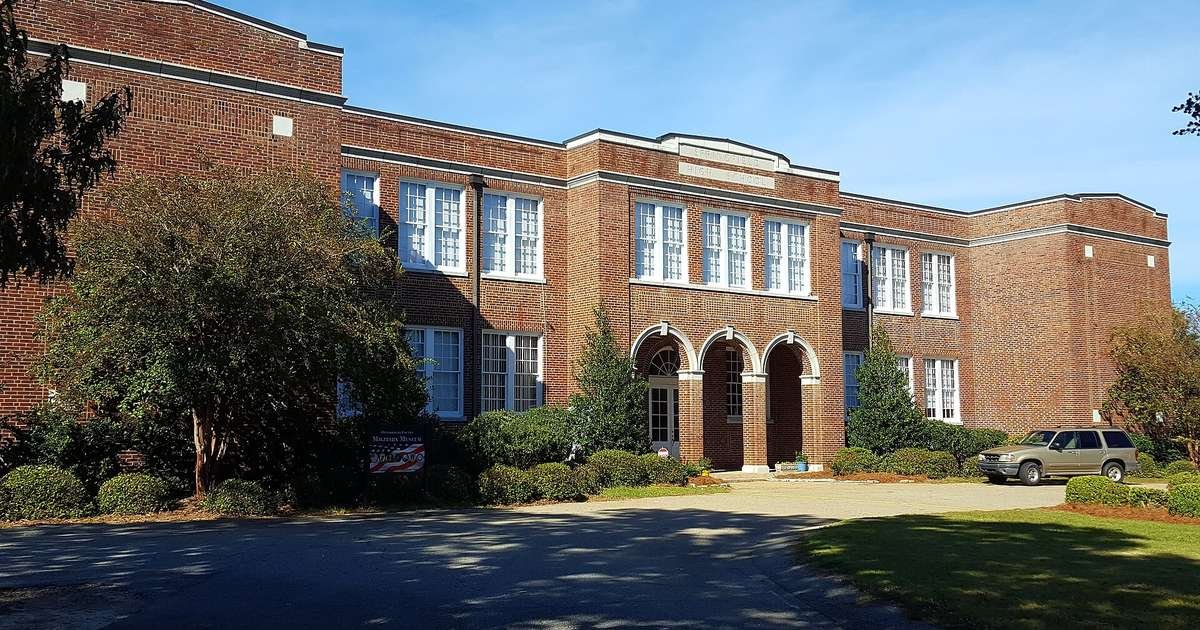
At 210 Brodie Street in Springfield, South Carolina, the former Springfield High School houses two museums and several community spaces. A visit can be as simple as looking at the school’s brick exterior or as involved as arranging a group tour. Start by deciding whether you want to see the 1929 building, the Springfield Regional Historic Museum or the Orangeburg County Military Museum. That choice determines what you should ask the town before you go.
What is inside the old Springfield High School?
The Town of Springfield lists a visitors welcome center, an educational exhibit room, an artisans center, an auditorium, meeting spaces and the Hutto Library branch at the complex. The two museums share the school address. Search results may show separate names for the venues, so when you contact the town, specify the museum or room you want to see.
| What you want to see | What to arrange |
|---|---|
| Springfield Regional Historic Museum | Ask which local-history exhibits can be visited and whether an appointment is needed. |
| Orangeburg County Military Museum | Ask about access to the military collection, even if another part of the building will be open. |
| Auditorium or artisans center | Ask about the space and any public programming on your date. |
| School architecture | Start with the Brodie Street facade from a public sidewalk. Verify access before going around the complex. |
The town’s visitor page welcomes group tours, and the town home page lists the address and main number. Use 803-258-3152 to ask which doors will be open, where to park and whether stairs, entrances or restrooms affect your group. Ask about admission and photography at the same time. A library schedule, a venue rental and a museum visit can each have different access arrangements.
Why the school is listed in the National Register
A 1926 act created a Springfield high school district from five smaller districts. The new school was part of an effort to consolidate rural education and put more resources in a single facility. Work by local contractor J.T. Dabbs began in 1928. The National Register nomination records a graduation in the new auditorium in 1929 while parts of the second floor were still unfinished. The building gives that statewide education story a specific address and a specific graduating class.
James Burwell Urquhart, a Columbia architect whose work included schools across South Carolina, designed the building. Look for the balanced wings, grouped windows and the decorated entrance on Brodie Street. From the sidewalk you can see how the doorways and rows of windows break up a long, two-story brick facade. The name above the main entrance is a useful detail to photograph or sketch because it identifies the school even though the rooms now have different uses.
The National Register nomination covers a campus with several structures, including a gymnasium and a graded school annex. Its campus map will help you read the site as a group of buildings. For example, the brick bell tower was dedicated in 1976, decades after the 1929 high school building. A quick look at the nomination before your visit gives you a way to identify which parts you are seeing.
How to get more from a museum visit
Give yourself one question to pursue in each room. In the history museum, you could look for how school, farming or the railroad shaped everyday life in this part of Orangeburg County. In the military museum, ask whether there is material associated with a period, person or branch of service that interests your group. A focused question helps you spend more time reading labels and looking at objects, particularly on a short visit.
If you are bringing a family recollection, write down names, approximate dates and the school or town you think the person was connected with. A volunteer can respond more readily to a specific lead. Call ahead about research appointments if you want to consult records, and leave original photographs or documents at home until you know what the museum can accommodate. For class or club visits, share the age group and the amount of time you have when you ask about a tour.
Look at the hallways and the layout if the building is open. The National Register record explains that a remodeling in 1975 reused the original auditorium for classrooms and a library and that work at the time helped preserve the proscenium arch. It is one example of how a school can change as students and communities need different space.
Make a second stop in Springfield
The town’s visitor page describes a walking trail through the former railroad corridor. Pairing a short walk there with a school visit lets you see how the town’s transportation and civic buildings fit together. If the museum is closed, a look at the school from the street and the public portions of the old rail corridor still make a coherent visit. See the Springfield history page for more context on the town’s development.
Sources and visit information
- Town of Springfield museum and building information
- National Park Service listing for Springfield High School
- Springfield High School National Register nomination and campus map
Featured photo by Upstateherd via Wikimedia Commons. CC BY-SA 4.0. Cropped and resized.